

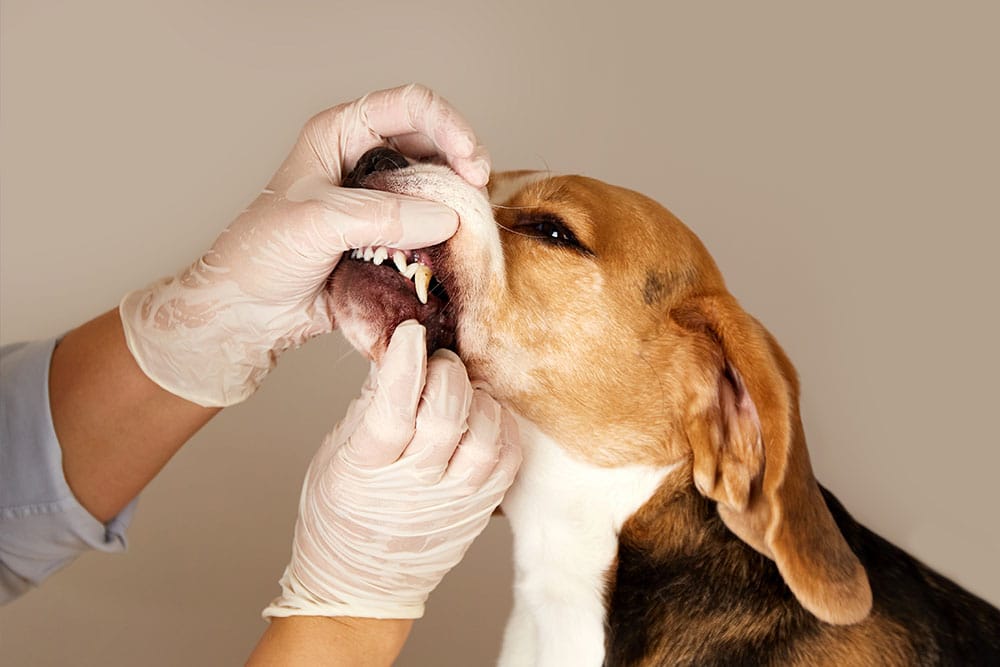
Routine dental care matters because dental disease is common, progressive, and quietly damaging, and staying ahead of it is far easier on your pet than repairing the damage later. It starts quietly: soft plaque hardens into tartar within days, bacteria slip beneath the gums, and the bone holding each tooth in place begins to erode. Left unchecked, that infection can even strain the heart, liver, and kidneys over time. The early clues are easy to miss: a pet who suddenly favors one side of the mouth, kibble dropped mid-meal, or gums that look redder than they should.
Gum disease builds quietly, which is why we look closely at dental health during wellness visits at Central Kentucky Veterinary Center. We offer dental cleanings and extractions for dogs and cats in Georgetown with full-mouth dental X-rays to find the damage hiding under the gumline. Our evening and Saturday hours make it easier to fit a visit into a full schedule. If you have noticed cautious chewing, a red line along the gums, or breath that has turned sour, request an appointment so we can take a look.
Dental Disease: What to Know
- Most dogs and cats show signs of dental disease by age three, yet the early clues are subtle enough that many families miss them until a tooth is already loose or gums are bleeding.
- Routine care works because dental disease is progressive: catching it at the reversible stage is quick and gentle, while advanced disease means extractions and surgery.
- Some pets need dental care sooner and more often, including small breeds, flat-faced dogs, heavy chewers, and cats prone to tooth resorption.
- Bacteria under the gumline don’t stay in the mouth, and over years they can add strain to the heart, liver, and kidneys.
- Anesthesia-free cleanings only polish the visible crown and can’t treat the disease that hides below the gumline, where it hurts most.
What Are the First Signs of Dental Trouble in Dogs and Cats?
The earliest signs of dental trouble are easy to talk yourself out of: breath that turns sour, a thin red line where the gum meets the tooth, a little bleeding on a chew toy, or a pet who chews more on one side. None of it looks like an emergency, which is exactly why it slips by for so long, and why a routine exam catches it when you can’t. That smell when your dog yawns usually comes from disease under the gumline, where plaque hardens into tartar and bacteria settle in to erode the bone anchoring each tooth. Worn, chipped, and broken teeth are common and lead to infection.
A fractured tooth exposes the sensitive pulp inside, giving bacteria a direct route into the root and jaw and leaving the pet in real pain. Caught at the red-gumline stage, treatment is quick and gentle compared to the loose teeth, jaw damage, and spreading infection that follow if it’s left alone.
What Serious Complications Come From Ignoring Dental Disease?
Untreated dental disease follows a predictable path through the stages of periodontal disease: gum inflammation that’s still fully reversible, then attachment loss, then bone destruction the body can’t repair.
When dental disease is ignored long enough, the infection stops respecting the boundaries of the mouth. What follows is painful and costly, and nearly all of it traces back to something that started as tartar. Here’s how that damage tends to show up:
- Behind the eye: When infection from an upper tooth root travels behind the eye, it can build into a retrobulbar abscess, a deep swelling that pushes the eye forward and needs urgent care.
- Into the nose: Disease around the upper canine teeth can eat through the thin bone between the mouth and nose, opening oronasal fistulas that let food and bacteria drain into the nasal passages.
- In the jawbone: In small dogs and cats, long-standing infection can hollow out the lower jaw until mandibular fractures occur during nothing more strenuous than chewing kibble.
- Tooth by tooth: Once the supporting bone dissolves, teeth loosen in their sockets, and sudden tooth loss can follow with almost no warning. These outcomes are largely preventable, and even advanced cases can be treated.
- Missed oral tumors: Growths in the mouth aren’t uncommon, and regular dental exams let us catch these while small. Oral cancers and tumors eventually eat away tissue and bone, but caught early they can be curable or open up far better treatment options, which is why any new lump, non-healing sore, or unexplained bleeding in the mouth deserves a prompt look.
- Weight loss: When chewing hurts with every bite, appetite decreases and pets lose weight. Dental pain is driven by bone loss, infection, or conditions like stomatitis.
- Systemic disease: Bacteria in the mouth stress the heart, liver, and kidneys, contribute to respiratory infections, and make diabetes harder to control.
The takeaway is timing: the same problem is reversible early and permanent late, which is the whole case for routine care. If your pet’s breath or eating habits have changed, reach out for an oral health assessment so we can stage what’s happening and map out the next step.
Which Pets Need the Most Dental Care?
Every dog and cat benefits from routine dental care, but some are wired for trouble and need it earlier and more often. Knowing whether your pet sits in a higher-risk group helps you stay a step ahead rather than catching problems after they’ve taken hold.
Small and Toy Breeds
Small dogs are the highest-risk group of all. When a Yorkie, Chihuahua, Pomeranian, or Dachshund carries a nearly full set of teeth in a tiny jaw, those teeth crowd together, trap food and plaque, and the surrounding bone is thin to begin with. The result is that dental disease in small-breed dogs starts younger, moves faster, and causes bone loss and loose teeth far sooner than in a large dog. If you share your home with a small or toy breed, earlier and more frequent professional care is one of the kindest things you can do for them.
Puppies and Kittens
Dental care isn’t just a senior-pet concern. The mouth of a young animal is where problems like retained baby teeth, misaligned bites, and missing or extra teeth first show up, and catching these early in a puppy or kitten can prevent painful complications down the road. A baby tooth that doesn’t fall out on schedule crowds the adult tooth and traps plaque, so we check the bite and the baby teeth at those first wellness visits while the fixes are still simple.
Cats and the Case for Dental X-rays
Cats face a problem you can’t always see coming: tooth resorption, where the tooth’s own structure breaks down from the inside, often at or below the gumline, and it is one of the most common and painful conditions. A cat who suddenly drops food, chatters the jaw when eating, or paws at the mouth may have a resorptive lesion that only a dental exam and X-rays will find. Cats also face an extremely painful condition from constant bacterial exposure on their teeth: stomatitis. This disease leaves the gums and cheek tissues raw, swollen, and bleeding.
Flat-Faced (Brachycephalic) Breeds
Bulldogs, Pugs, Persians, Boston Terriers, and other flat-faced breeds pack a normal number of teeth into a shortened jaw, so crowding, rotated teeth, and abnormal bites are the rule rather than the exception. Those overlapping teeth trap plaque in spots a brush can barely reach and set up early periodontal disease, so these pets benefit from closer monitoring and, often, more frequent cleanings.
Big Dogs and Heavy Chewers
Large, powerful dogs and dedicated chewers face the opposite problem: fractured teeth. A Lab or Shepherd who bears down on a bone, antler, hard nylon toy, or a rock can crack a major chewing tooth in an instant, exposing the pulp and setting up infection. The single best prevention is choosing chews that flex a little rather than the rock-hard kind, and having any suspected fracture checked promptly.
Are Anesthesia-Free Cleanings as Good as Professional Dental Care?
Anesthesia-free dental cleanings (AFDs) aren’t a substitute for professional dental care.
- AFDs only scrape the visible surface of the crown and never reach below the gumline, which is exactly where the disease that hurts pets takes hold.
- No full-mouth X-rays are taken, meaning AFDs miss painful pathology and can leave a family falsely reassured by a polished crown while an infected root sits untreated underneath.
- Pets are restrained by strangers who are wielding razor-sharp objects in their mouths, resulting in stress to your pet and potential for injury.
- AFDs don’t protect the airway, meaning your pet could breathe in dislodged bacteria and chunks of tartar, which can cause pneumonia.
- Staff performing AFDs often don’t have training to identify growths or disease, leaving problems to progress unchecked.
Good veterinary dental care is thorough and individualized. It includes a full oral exam, full-mouth radiographs, careful anesthesia monitoring, and a pain management plan matched to your pet’s species, breed, age, and personal risk. The standard behind that care matters as much as the equipment. Our AAHA accreditation reflects a voluntary commitment to recognized guidelines for anesthesia, monitoring, and dental practice. When you’re choosing where your pet’s teeth are cared for, look for a team that follows these standards rather than shortcuts, because thoroughness and safety protect your pet on the table and long after.
What’s the Best Way to Take Care of My Pet’s Teeth at Home?
Good home dental care comes down to a simple, consistent routine that works for your pet and your family. Daily brushing with a pet-safe toothpaste is ideal, and there are other dental products that work if brushing is out of the question. These habits slow the plaque buildup that starts the whole cascade, stretching the time between professional cleanings:
- Brush daily: Use a soft brush and toothpaste made for pets, since human toothpaste isn’t safe to swallow. Working the brush along the gumline at a slight angle is where the real benefit lives, and this step-by-step guide to brushing your pet’s teeth makes the introduction easier. Even a few times a week beats nothing, and most dogs and cats warm up to it with patience.
- Have a backup: A daily dental chew, tooth wipes, water additives, enzymatic powders on food, oral sprays, and dental diets can all help, though they are less effective than daily brushing. The Veterinary Oral Health Council keeps a running list of products independently proven to slow plaque and tartar, which takes the guesswork out of the pet-store aisle.
- Skip the hard stuff: Bones, antlers, and hard nylon chews are a leading cause of fractured teeth, so choose something that flexes a little.
- Check weekly: Lift the lip and look for redness, tartar, drooling, or a reluctance to be touched, and call us if something looks off.
Our online pharmacy has a wide selection of vet-trusted products, and our team is happy to make recommendations. Home care slows dental disease but can’t replace a professional cleaning, since brushing reaches the crown while the damage that matters happens below the gumline. If brushing feels like a losing battle, ask us at your pet’s next visit and we’ll walk you through the technique in person.

Frequently Asked Questions About Pet Dental Health
How often should my pet have a dental cleaning?
It depends on the individual. Many dogs and cats benefit from a professional cleaning every year, while small breeds and cats prone to tartar may need them more often, and some larger dogs less. The best guide is what we see during wellness exams, plus how well the home routine is keeping plaque in check. We’ll recommend a schedule that fits your pet rather than a one-size-fits-all rule.
Is anesthesia safe for my older dog or cat?
Age itself isn’t a disease, and many senior pets handle anesthesia well. Before any dental procedure, we run pre-anesthetic bloodwork and tailor the anesthetic and monitoring plan to your pet. For an older pet, leaving a painful, infected mouth untreated often carries more risk than a carefully managed procedure. We’re happy to talk through the specifics with you.
My pet is still eating normally, so their teeth must be fine, right?
Not necessarily. Dogs and cats are remarkably good at hiding oral pain and will often keep eating through significant dental disease because the drive to eat is so strong. A normal appetite is reassuring, but it doesn’t rule out infected roots, tooth resorption, or bone loss below the gumline. That’s why an exam, and often X-rays, catch problems that behavior alone would never reveal.
Give Your Pet’s Mouth the Attention It Needs
Pets hide oral pain until disease is well advanced, so waiting for an obvious problem usually means waiting too long. That is the case for routine care in one sentence: regular exams and cleanings catch trouble while it is still small, before bad breath becomes a loose tooth, facial swelling, or strain on the rest of the body.
If any of this sounds familiar, get in touch with our team at Central Kentucky Veterinary Center and we’ll help you protect your pet’s comfort with gentle, professional dental care.




Leave A Comment