

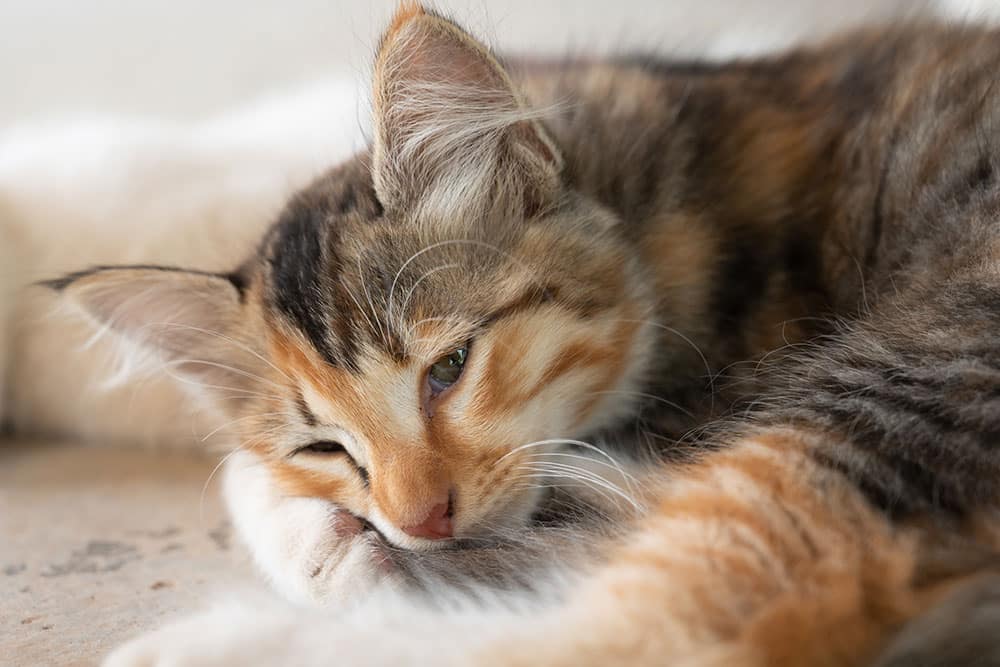
You can usually tell your pet is in pain by the small changes you notice first: the dog who hesitates at stairs he used to take in one leap, or the cat who quietly stops grooming her lower back. Pets instinctively hide discomfort, a survival habit inherited from their wild ancestors, so by the time you see a difference, the pain has often been there for a while. Watch for reluctance to jump or play, extra sleep, hiding or withdrawing, flinching from touch, panting, restlessness, and shifts in appetite or grooming. A single off day is rarely cause for alarm. Changes that persist or build over days are your pet’s clearest way of asking for help, and they deserve a veterinary exam.
September is Animal Pain Awareness Month, and at Central Kentucky Veterinary Center in Georgetown, catching pain early and treating it appropriately is something we focus on all year-round. Our AAHA-accredited team starts with a thorough exam, then uses digital imaging such as our in-clinic X-rays and CT scanner to find the source, whether that is arthritis, dental disease, or an injury. Our comprehensive veterinary care in Georgetown offers pain control options beyond traditional medication, like acupuncture, chiropractic care, stem cell therapy, and canine rehabilitation, so managing your pet’s comfort is not limited to a pill bottle. With evening and weekend appointments, we can see pets from Georgetown, Lexington, and across Scott County when a limp or a lost appetite will not wait. If something about your dog or cat seems off, request an appointment and let us take a look.
Pet Pain in a Nutshell
- Dogs and cats mask discomfort by instinct, so small changes that persist, like skipped jumps, extra sleep, hiding, or a rougher coat, mean more than any single dramatic moment.
- Most pain traces back to treatable conditions, including arthritis, dental disease, ear infections, and soft tissue injuries, and every one of them is easier to manage when it’s caught early.
- Relief is rarely limited to a pill: veterinary pain plans can combine prescription medication, monoclonal antibody injections, acupuncture, chiropractic care, laser therapy, stem cell therapy, and rehabilitation.
- A pet who suddenly can’t stand, cries without stopping, collapses, or may have a broken bone needs immediate care, whether with us or at the nearest veterinary ER.
Why Does Hidden Pain Matter So Much?
Pain in pets is both physical and emotional, and most of it stays hidden. A sore hip hurts, but it also chips away at mood, appetite, and patience. A dog may growl at a child who bumps a tender hip, not because their temperament changed but because their body did. When a sweet pet turns grumpy, pain belongs at the top of the suspect list.
Left alone, pain rarely stays put. The nervous system adapts to constant discomfort by becoming more sensitive to it. Most of the common pain conditions we see, from aching joints to infected teeth, respond far better early than after a year of slow progression.
What Are the First Signs of Pain in Dogs and Cats?
The first signs of pain are almost never dramatic. They look like small subtractions from normal: a jump not taken, a meal half finished, a less-groomed coat, or a greeting at the door that stops happening.
| What changes | In dogs, it often looks like | In cats, it often looks like |
| Movement | Hesitating at stairs, stiffness after naps, lagging on walks | Skipping the counter jump, taking furniture “steps” instead |
| Grooming | Licking one joint or paw over and over | A greasy or matted coat over the back and hips |
| Social habits | Ducking away from petting, short temper | Hiding in closets, skipping the usual lap time |
| Daily routine | Restless nights, circling before lying down | Missing the litter box because climbing in hurts |
Pain Clues Specific to Dogs
Watch your dog’s posture and first steps. An arched back, a lowered head, or weight shifted off one leg all suggest something aches. Lethargy in dogs has a long list of causes, and pain is one of the first things we rule out, especially when low energy arrives alongside irritability or restless pacing at night.
Pain Clues Specific to Cats
Cats hide pain better than almost any other species, so their clues are subtler still. A cat whose coat turns rough because reaching back hurts, or who chooses the floor over the windowsill, may be protecting aching hips or knees. A cat who stops using the litter box might be telling you that climbing in and out hurts, or that they’re experiencing pain when urinating or defecating.
Faces talk, too: the Feline Grimace Scale is a validated scoring tool that reads squinted eyes, flattened ears, muzzle tension, whisker position, and head posture to estimate discomfort, and you can watch for those same features at home. Take lethargy in cats seriously as well, since extra sleep or hiding more is sometimes the only sign a cat ever shows.
When a change like this holds for more than a day or two, reach out to us and we’ll find a time to look your pet over.
Which Health Problems Are Usually Behind the Pain?
Most of the pain we diagnose traces back to a familiar, treatable list led by arthritis and dental disease, and none of these conditions announces itself clearly, which is why the exam matters more than any single symptom.
- Dental disease: a fractured or infected tooth can ache for months while your pet learns to chew on one side and never misses a meal.
- Ear infections: an inflamed ear canal can turn head scratches, collar grabs, and even a good shake into misery.
- Osteoarthritis: the most common source of chronic pain in dogs and cats, and heavily underdiagnosed in cats, who tend to show it as behavior change rather than limping.
- Anal gland problems: scooting, licking under the tail, or a sudden yelp when sitting down.
- Joint diseases: hip dysplasia, cruciate ligament injuries, intervertebral disc disease, or any joint with injury or anatomical problems causes pain and eventually arthritis.
- Pancreatitis: inflammation of the pancreas that causes real abdominal pain, often with a hunched posture, vomiting, and a lost appetite.
- Gastrointestinal issues: inflammatory bowel disease, foreign body ingestion, constipation, and more add to general abdominal pain and pain when defecating.
- Urinary tract diseases: crystals or stones in the bladder, inflammation in the urinary tract, and infection all cause significant abdominal pain and pain when urinating.
- Eye problems: a scratched cornea or glaucoma brings squinting, tearing, and pawing at the face, and it worsens quickly without treatment.
- Post-surgical and trauma pain: predictable soreness after a procedure or accident that deserves a planned recovery, not a wait-and-see approach.
Finding the source starts with an unhurried, gentle exam, because a tense pet guards a tender spot and hides the very clue we need. When the answer lies deeper than an exam, X-rays, or ultrasound can reach, our CT imaging shows bone and soft tissue in three dimensions and finds problems that flat images can miss.
How Do Veterinarians Treat Pain in Pets?
Treating pain starts with naming its source, because a sore tooth, an inflamed pancreas, and an arthritic hip each call for a different plan. From there we build around your pet’s age, health, and lifestyle, and the best results usually come from layering treatments rather than leaning on any one, pairing medication with hands-on therapies that address the same problem from another angle.
Medication Chosen for Your Pet, Not the Average Pet
Modern pain medications span several classes, and each has a job. Veterinary NSAIDs calm inflammation in arthritic joints and after surgery. Gabapentin settles nerve-related pain. Short courses of stronger analgesics carry pets through the hardest days after an injury or procedure. For osteoarthritis, monoclonal antibody therapy like Librela for dogs and Solensia for cats targets a specific pain signal with one injection a month, which can be a real turning point for pets who don’t tolerate daily pills or when NSAIDs aren’t enough.
We check kidney and liver values through our in-house lab before starting a long-term medication and periodically while your pet stays on it, so a developing problem shows up on a lab report long before it shows up in your pet.
Rehabilitation
Rehabilitation rebuilds the strength, flexibility, and balance that pain quietly takes away, one targeted exercise at a time, and it is one of the most effective tools we have for arthritis and post-surgical recovery. A pet who hurts moves less, loses muscle, and then hurts more from the weakness, and structured therapy breaks that cycle. The role of rehabilitation in arthritis is well established, since controlled exercise maintains joint motion and muscle support without the pounding that aggravates a sore joint. Our canine rehabilitation program builds a plan around what your dog actually needs, whether that is recovering from a cruciate surgery, rebuilding after an injury, or keeping an arthritic senior mobile and comfortable for as long as possible.
Laser Therapy
Laser therapy uses focused light to reduce inflammation and ease pain in a specific area, with no medication and no discomfort during the session, which makes it a gentle add-on for pets already carrying a full medication list. Most pets settle and relax through the few minutes it takes. Laser therapy is great for arthritis pain but is also beneficial for healing incisions and soft tissue injuries, frequently in a series of sessions that build on each other. It pairs especially well with rehabilitation, since a more comfortable joint moves more freely through its exercises.
Stem Cell Therapy
For arthritis and certain orthopedic injuries, stem cell therapy takes regenerative cells from your pet’s own body and concentrates them where the damage is, aiming to calm inflammation and support the repair of injured tissue rather than simply masking the ache. It is a fit for select cases, particularly dogs with significant joint disease who need something beyond daily medication, and we’ll have an honest conversation about whether your pet is a good candidate and what results are realistic.
Acupuncture and Chiropractic Care
Veterinary acupuncture places hair-thin needles at specific points to relax tight muscle and dial down pain signaling, and most pets tolerate it with surprising calm, often dozing partway through. Chiropractic care complements it by restoring motion to joints that have stiffened into guarded, restricted patterns. Our acupuncture and chiropractic care works well alongside medication and the therapies above, especially for chronic pain and arthritis.
How Can You Make Home Easier on a Pet in Pain?
Home adjustments take daily strain off sore joints and healing bodies:
- Ramps or pet steps up to the couch, bed, or car spare the jump
- Non-slip rugs give traction on hardwood
- Raised food and water bowls ease a stiff neck
- A thick, warm bed away from drafts helps a pet rest without pressure points
Match activity to the body your pet has right now. Three short, sniff-heavy walks beat one long weekend hike for an arthritic dog, and a few minutes of gentle play spread through the day suits a stiff cat better than one wild session. For cats, a litter box with one low side and steps up to a favorite window perch keep routines intact. A support harness with a handle lets you steady a weak-hipped dog on the stairs or help them into the truck.
Keep a simple record while you adjust things: short phone videos of the limp or the hesitation, plus notes about good days and bad ones. A structured pain checklist can help you track the signs consistently, and these notes often reveal patterns an exam room can’t. Senior pets especially benefit from exams every six months so the plan changes as their body does. Our veterinary team can tailor all of these suggestions to your pet’s condition and your home’s layout.
When Is Pain in a Pet an Emergency?
Pain becomes an emergency when it’s sudden, severe, or paired with collapse. A pet who can’t stand or walk, cries or paces without stopping, refuses both food and water, has been hit by a car, or may have a broken bone needs to be seen right away, not watched overnight.
Speed matters for reasons beyond comfort. A pet guarding a fractured leg can worsen the break with one wrong step, untreated abdominal pain can hide a condition that grows more dangerous by the hour, and severe pain itself can push a body toward shock. If your pet shows any of these signs, call us or head to the nearest veterinary ER.
Questions Pet Families Ask About Pain
Can I give my dog or cat human pain medication?
Human pain relievers are one of the most common causes of pet poisoning. Ibuprofen and naproxen can cause stomach ulcers and kidney damage in dogs and cats, and even a small dose of acetaminophen can be deadly for a cat. Check with us before giving your pet anything from your own medicine cabinet, including baby aspirin. If your pet has already swallowed a human medication, contact ASPCA Animal Poison Control or the Pet Poison Helpline right away, then let us know what they took and how much.
Do pets cry or whine when they’re in pain?
Most pets in pain stay silent, which surprises many families. Vocalizing usually points to pain that’s sudden or severe, like a back injury or a bad fall. A quiet pet who has stopped jumping, playing, or grooming can be hurting just as much as one who cries.
Is my senior pet slowing down because of age or because of pain?
Slowing down is usually a sign of something treatable, most often arthritis, rather than age itself. Age is not a disease, and plenty of senior dogs and cats perk up remarkably once their pain is managed. A mobility-focused exam can sort out which changes are truly age and which are aching joints.
How do veterinarians measure pain if pets can’t describe it?
We use validated pain scales that score posture, facial expression, movement, and how a pet responds to a gentle touch near the sore area. Scoring the same way at every visit shows whether a treatment plan is working or needs adjusting. Your observations from home carry real weight in that score, too.
Pain Awareness Doesn’t End in September
Animal Pain Awareness Month gives September the headline, but the real watching happens in your kitchen, on your stairs, and at the foot of your bed all year long. Pain isn’t something your dog or cat simply has to live with; nearly every source of it can be eased once we know it’s there. Trust what you notice, even when it seems small.
If your pet is showing signs of pain, request a visit at Central Kentucky Veterinary Center in Georgetown and we’ll help you find the cause and build a plan that puts the jump, the purr, and the appetite back where they belong.



Leave A Comment