

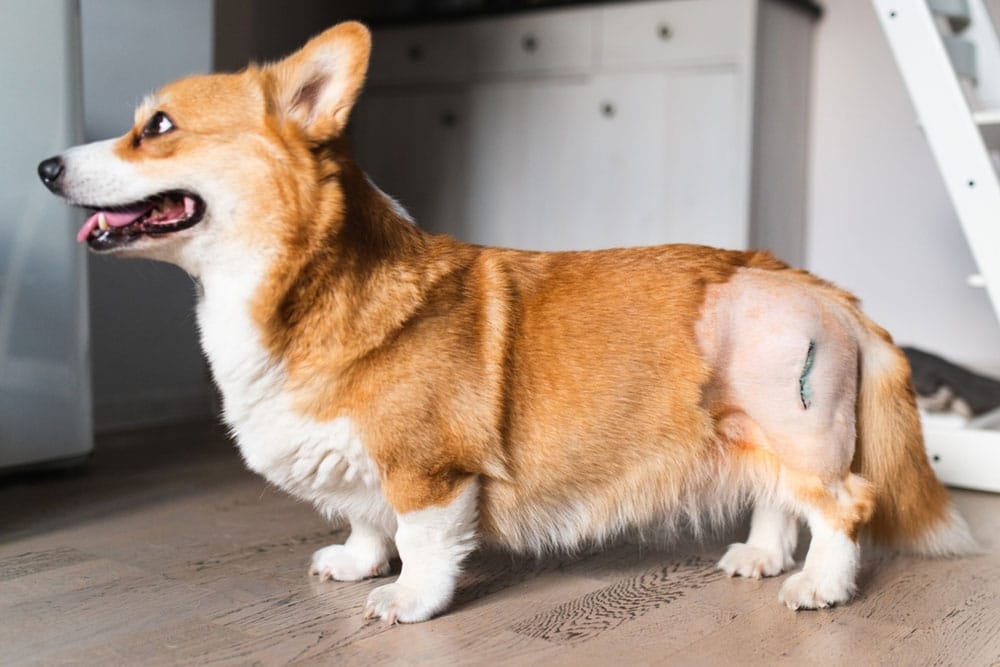
If your dog pauses at the bottom of the steps and thinks hard before climbing them, that hesitation can be the first visible sign of hip dysplasia. The condition begins as a loose fit between the ball and socket of the hip, and it shows up at home before it ever shows up in an exam room: a bunny-hopping run across the backyard, hips that sway on the walk through the neighborhood, stiffness after a long nap, or less enthusiasm for the tennis ball. It affects fast-growing large-breed puppies and graying seniors alike. The genetics behind it cannot be undone, but early recognition, weight control, rehabilitation, and sometimes surgery can keep an affected dog moving comfortably for years.
At Central Kentucky Veterinary Center in Georgetown, hip dysplasia is a condition we manage from the first suspicious X-ray onward. Our AAHA-accredited team takes digital radiographs right here in the hospital, and we offer both PennHIP and OFA hip screening on-site, so we can measure a dog’s risk long before arthritis sets in. Once we understand your dog’s hips, we build a plan around them rather than a template: weight and nutrition counseling, acupuncture and chiropractic adjustments, in-house stem cell therapy for arthritic joints, and a structured canine rehabilitation program to rebuild the muscle that protects a loose hip. Rehabilitation earns its place at the center of that list, because the strength your dog regains often matters as much as the pain we relieve. When a hip needs more than conservative care, we will walk you through the surgical options too. If your dog is hesitating at the stairs or rising slowly after rest, schedule an evaluation to get them checked out before permanent arthritic damage is done.
Start Here: Canine Hip Dysplasia Basics
- Hip dysplasia begins as an abnormal fit between the ball and socket of the hip; genetics set the stage, while growth rate, weight, and activity habits decide how much trouble the joint causes.
- The earliest signs are subtle changes in movement rather than obvious pain, and they deserve an exam well before a persistent limp appears.
- Screening tools like PennHIP and OFA can measure a dog’s hip health early, on-site, which opens up time-sensitive prevention and the youngest surgical options.
- Many dogs stay comfortable for years on conservative care built around weight control, rehabilitation, and pain management, with surgery reserved for hips that need more.
What Is Hip Dysplasia in Dogs, and Which Breeds Are Most at Risk?
Hip dysplasia is a developmental condition in which the ball of the femur and the socket of the pelvis grow into a poor fit for each other. The loose joint shifts slightly with every stride, damaging cartilage and setting up arthritis.
Canine hip dysplasia shows up most often in large and fast-growing breeds: German Shepherds, Labrador and Golden Retrievers, Rottweilers, Saint Bernards, and Great Danes top the list, though Bulldogs carry their own version and mixed breeds aren’t exempt. After birth, everything else shapes the outcome. Rapid growth on calorie-dense food pushes the skeleton faster than its supporting soft tissue can keep up. High-impact exercise pounds joints that haven’t finished forming, and extra body weight multiplies the force on a loose hip with every step.
What Do the Early Signs of Hip Dysplasia Look Like at Home?
Early hip dysplasia usually announces itself through movement changes rather than obvious pain, and dogs are experts at hiding discomfort, so patterns matter more than yelps.
| What you may notice early | What suggests arthritis is gaining ground |
| A bunny-hopping run, both back legs pushing as one | Struggling to rise, especially on hard floors |
| Brief stiffness after naps that works itself out | Stiffness that lingers through the whole morning |
| Hesitation at stairs, the couch, or the tailgate | Refusing stairs and jumps outright |
| Tiring sooner than usual on walks | Thinner thighs paired with heavier shoulders |
| An occasional, off-and-on skip in the stride | A persistent limp, or irritation when the hips are touched |
If anything in that table sounds familiar, take a short video of your dog moving and when they’re struggling and bring it along. Dogs move differently in the excitement of veterinary visits, so seeing what’s normal for them at home helps our team.
Can You Get Ahead of Hip Dysplasia in an At-Risk Puppy?
Planning ahead for an at-risk puppy changes how hip dysplasia plays out. The biggest levers, such as growth rate, body condition, exercise style, and the timing of early screening, all sit in the first year of life before arthritis takes hold.
That planning can start before you choose the puppy. Reputable breeders evaluate their breeding dogs and share the results, so ask to see hip health certifications for both parents. Certified parents don’t promise perfect hips, but they shift the odds in your favor.
Once your puppy is home, two early moves pay off. The first is a screening X-ray, which we can do here, and timing matters because the most time-sensitive surgical option closes its window around five months of age. The second is to consider pet insurance while your puppy’s hips are still officially healthy, since coverage started after signs appear will generally treat hip dysplasia as a pre-existing condition.
Day to day, the goal is slow, lean growth. We build preventative health care around age and breed, and for a Lab or Shepherd puppy that means a large-breed growth food fed to a lean body condition, plus exercise that respects soft growth plates: free play on grass over forced jogging on pavement, and no marathon fetch sessions before the skeleton finishes growing.
What Are PennHIP and OFA Hip Screenings, and Why Do They Matter?
PennHIP and OFA are the two established ways to evaluate a dog’s hips with X-rays, and we perform both here in Georgetown. They answer slightly different questions, which is why the right one depends on your dog’s age and what you are trying to learn.
- PennHIP measures joint laxity, the looseness that drives the whole disease, and it produces a numeric score comparing your dog to others of the same breed. Its biggest advantage is age: a reliable PennHIP evaluation can be done as early as sixteen weeks. Catching a loose hip that early is the only way to reach the most time-sensitive surgical option, and even when surgery is never needed, an early laxity score tells us how aggressively to manage weight, exercise, and joint support before any arthritis develops.
- OFA scoring evaluates a hip film for evidence of dysplasia and arthritis and assigns a grade from excellent through mild, moderate, or severe. Formal OFA hip certification is typically done at two years of age and is the standard breeders use to make responsible breeding decisions, so if you plan to breed your dog, or simply want the recognized certification on record, this is the screening that provides it.
The practical takeaway is that these are complementary, not competing. For an at-risk puppy, an early PennHIP measurement guides prevention while the window for the youngest interventions is still open. For an adult, OFA certification documents where the hips stand. Being able to offer both means we can match the screening to your dog rather than sending you elsewhere for one of them, and we are glad to talk through which makes sense for your dog’s age and situation.
How Do Veterinarians Diagnose Hip Dysplasia?
Diagnosing hip dysplasia combines an orthopedic exam with imaging. We feel for looseness in the joint, test range of motion, check for thigh muscle loss, and watch your dog walk and trot. X-rays then confirm the diagnosis, grade its severity, and show how much arthritis has already developed.
During the exam we may check for the Ortolani sign, a palpable clunk as a loose hip slips in and out of its socket. The films are usually taken during the same visit. Light sedation is often needed, since well-positioned hip films require relaxed muscles and a perfectly symmetrical pelvis, and no awake dog holds that pose for long. This is true of PennHIP and OFA films as well, where precise positioning is what makes the score meaningful.
What the images show shapes what we recommend. A ten-month-old with laxity but clean joint surfaces hears a very different plan than a nine-year-old with years of built-up arthritis.
How Is Hip Dysplasia Managed Without Surgery?
Many dogs with hip dysplasia never need an operation. Conservative care built on weight control, structured rehabilitation, pain medication, and joint support keeps most of them comfortable for years. The aim is simple: preserve muscle, control pain, and protect the mobility your dog still has.
- Weight control: keeping your dog lean is the single most powerful medicine we have for a dysplastic hip, and because fat tissue produces inflammatory hormones, a trim body helps the joint twice.
- Rehabilitation: veterinary physical rehabilitation uses targeted, progressive exercise to rebuild the gluteal and thigh muscle a loose hip depends on for stability. Our canine rehabilitation services begin with a detailed assessment of gait, posture, range of motion, and muscle strength, then build from there.
- Pain relief: prescription anti-inflammatories remain the backbone of pain management for arthritic hips, with newer injectable antibody therapies available for dogs who need a different approach.
- Joint support: joint supplements like omega-3 fatty acids and glucosamine may ease inflammation and support cartilage, working best as part of a complete plan rather than the whole plan.
- Complementary therapies: many arthritic dogs visibly relax with acupuncture and chiropractic care, a drug-free source of comfort we offer alongside conventional treatment.
- Stem cell therapy: for hips that are already arthritic, stem cell therapy uses cells from your dog’s own tissue to calm inflammation and promote healing inside the joint.
- Home adjustments: traction runners on slick floors, a ramp for the truck or couch, and shorter, more frequent walks all reduce daily wear on sore hips.
- Spryng injection: a single injection of Sprung’s gel-like microparticles provides both immediate lubrication and long-term synovial structural support for improved joint health unlike other products that only treat signs (NSAIDs, Corticosteroids, monoclonal antibodies and others.
Conservative care is never set-and-forget. Comfort shifts with age, body condition, and season, especially through central Kentucky’s damp winters, so we recheck regularly, adjust medications, and progress exercises as your dog changes. The plan that suits a four-year-old rarely fits the same dog at nine.
When Does a Dog With Hip Dysplasia Need Surgery?
Surgery becomes the right conversation when pain persists despite well-run conservative care, when a puppy’s hips are loose enough that severe arthritis looks inevitable, or when the joint is already too damaged for medication to matter. Age, size, and disease stage decide which procedure fits.
For the youngest patients, timing is everything, and this is exactly where an early PennHIP score earns its keep.
| Procedure | Typical candidate | What it involves |
|---|---|---|
| Juvenile pubic symphysiodesis (JPS) | Puppies under about 20 weeks with confirmed laxity | A short growth-plate procedure that improves socket coverage as the pelvis grows |
| Double or triple pelvic osteotomy (DPO/TPO) | Young dogs, usually under a year, with loose hips but little arthritis | The pelvis is cut and rotated so the socket captures the ball |
| Total hip replacement (THR) | Mature dogs with advanced arthritis and persistent pain | The ball and socket are replaced with implants |
| Femoral head ostectomy (FHO) | Smaller, lighter dogs, or cases where other options aren’t practical | The ball is removed and muscle forms a pain-free false joint |
Some of these procedures are only performed by board-certified surgeons, and we help to manage everything around the visit: the diagnostic films a surgeon needs, the referral conversation, pain control on both sides of the operation, and structured rehabilitation. Rehabilitation is a critical part of turning a dog who had a successful surgery into a dog who actually returns to an active, normal life.
What Happens If Hip Dysplasia Is Left Untreated?
An untreated dysplastic hip follows a predictable downhill path: cartilage wears through, arthritis becomes severe and constant, thigh muscle atrophies away from disuse, and pain becomes a part of everyday movement. None of it happens overnight, and very little of it is inevitable when care starts early.
Arthritis management gets harder the longer inflammation runs unchecked. A severely loose, arthritic joint also sits one bad twist away from hip luxation, a full dislocation that turns a chronic condition into an acutely painful crisis.

Delay narrows choices, too. Dogs who might have thrived on rehabilitation and medication can end up needing salvage surgery and a longer recovery.
Common Questions About Canine Hip Dysplasia
When should my puppy be screened for hip dysplasia?
It depends on the goal. If you have an at-risk breed and want the earliest possible read, PennHIP can measure hip laxity as young as sixteen weeks, which is early enough to consider the most time-sensitive surgical options. If you are after formal certification, OFA hip scoring is typically done at two years of age. We are happy to walk through which fits your dog, and we perform both here.
Can hip dysplasia in dogs be cured?
A true cure isn’t possible, because the loose anatomy is built into the joint and medication can’t reshape it. Total hip replacement comes closest by replacing the joint entirely. For everyone else, the realistic goal is controlling pain and preserving function, and well-managed dogs often stay as active as their housemates for years.
Do puppies ever grow out of hip dysplasia?
Some puppies who limp at six or eight months seem fine by their first birthday as tissues tighten and muscle develops. The joint is still abnormal, though, and arthritis usually resurfaces in middle age. Treat a quiet stretch as a reprieve worth protecting with lean weight and strong muscle, not proof the problem is gone.
Is walking good for a dog with hip dysplasia?
Consistent, moderate leash walks are among the best things you can do, because they maintain muscle without pounding the joint. The pattern to avoid is the weekend warrior cycle: a quiet week followed by two hours of fetch on Saturday. Steady beats intense, every time.
Stronger Hips for the Seasons Ahead
A hip dysplasia diagnosis can feel heavy in the moment, and it almost never means what families first fear. With early recognition, a plan tuned to your dog, and steady follow-through, most affected dogs stay active and happy for many years. The team at Central Kentucky Veterinary Center has watched plenty of stiff, hesitant dogs rebuild real strength through rehabilitation, and there’s room in that program for yours. If you’re worried about your dog’s long-term mobility or want to have your puppy checked to get a head start, a hip evaluation in Georgetown is the natural next step.


Leave A Comment